Climate pledges and cheap solar have not moved countries off fossil fuels fast enough. Fear of dependence will.
The arsenal, then and now
On December 29, 1940, nearly a year before America joined the second world war after the surprise attack at Pearl Harbor, U.S. President Franklin D. Roosevelt coined the term the “Arsenal of Democracy” during a radio broadcast to the American public. Roosevelt argued that America had an essential duty to sell and supply weapons to democracies under siege to ensure their own national security and to keep U.S. soldiers out of direct combat. At a time when one of the oldest democracies in the world, Great Britain, was under siege from a Nazi army advancing rapidly across continental Europe, framing U.S. military production and exports in terms of protecting and ensuring democracy was an accurate and convincing assessment. From that time carrying forward to today, America has retained its position as being the world’s “Arsenal of Democracy”, boasting the largest military industrial complex the world has ever seen.
Today, there is a key difference in existential threats. In a growing globalized world where energy demands are increasing exponentially, the new arsenal of democracy will no longer be composed of howitzers and glide bombs, but something entirely different.
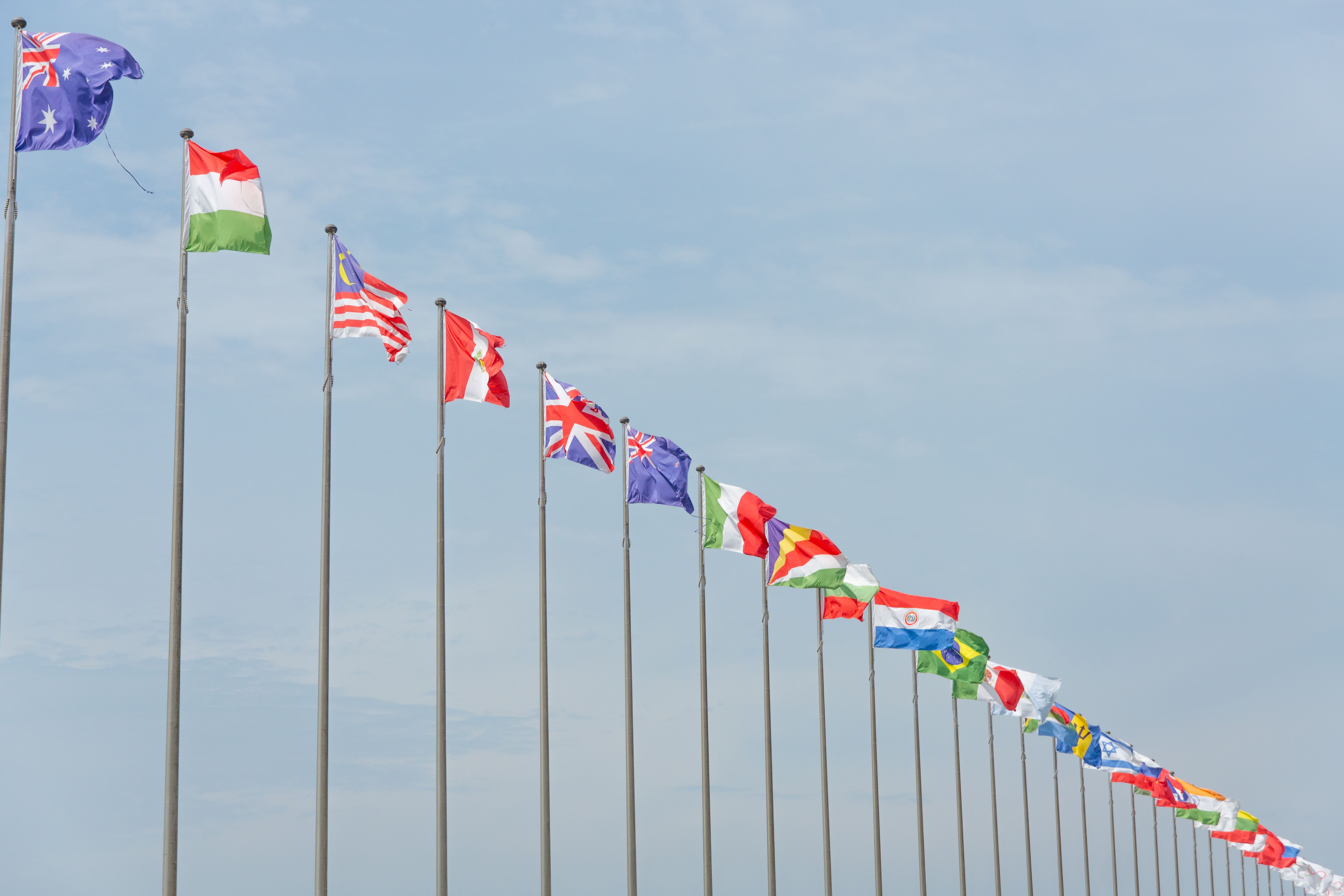
Three quarters of a century later, in December of 2015, the world came together in what was considered by some to be a watershed moment. The global climate agreement in Paris represented one of the strongest examples of collective action by nations to prevent what is certain to be an existential threat to humanity. 196 countries from across the globe signed onto an agreement that would fundamentally change the actions taken within their own jurisdictions with the goal of reducing greenhouse gas emissions, primarily released through the production and consumption of fossil fuels. The overarching pledge was to take action to limit warming of the planet to within 1.5 degrees celsius in an effort to prevent the worst of the negative effects of climate change.
In 2026, more than a decade on from that moment, it is clear to say that the agreement has not been honored. The UN Environment Programme (UNEP) 2026 Emissions Gap Report has concluded that the previous goal of limiting global warming to within 1.5 degrees celsius is not viable as emissions cuts have been too slow. If climate change represents an existential threat to humanity, that is one that will lead to our collective extinction, then why have we been so slow to act? This question has hundreds of complex answers concerning every aspect of political science, engineering, social psychology, and more.
Rules that reward the wrong behaviour
To begin to answer this question from a wider system perspective, one can analyze the selective pressures that are forcing nations to act in certain ways. Structuring policy systems around trying to incentivize actors to behave according to a set of rules with specific goals in mind is an age-old question that has been explored in depth in the field of Game Theory. Many of these structures are addressed by a subfield of game theory known as Mechanism Design, which directly studies how to design the rules of a game or institution to achieve a specific, desirable outcome.
A classic example of mechanism design in action is that of the Vickrey Auction. In a Vickrey Auction, every player submits a single, secret bid in a closed envelope for their desired price to pay for a given item. Similar to any normal auction, the highest bidder is awarded the item. The catch is that the winner of the auction does not pay their own bid, instead they must pay the amount of the second-highest bid. In this way, the dominant strategy of a Vickrey Auction is to always honestly bid at your exact maximum budget for a given item.
Without stumbling too far down the rabbit hole of game theory, the main point is that the incentive structure stemming from agreements such as the Paris Climate Agreement does not follow closely with that of mechanism design. Since it is allowable in the short term to ignore the foreboding consequences of global warming, players are incentivized to act in ways that circumvent structures that penalize higher emissions. If company A can skew their carbon emissions targets by reducing carbon intensity while company B tries to reduce their overall lifecycle carbon emissions in an industrial carbon pricing system, company A may be rewarded for an action which is accelerating a negative consequence for humanity. Likewise, action to reduce global dependency on fossil fuels broadly falls along several trains of thought.
The first train of thought, which one can argue has not ever fully materialized, exhibits itself in an altruistic approach. Because players themselves make up humanity, they have an incentive to act in ways that benefit all of humanity. Whether this is a strictly logical or altruistic argument is up for debate, but the reality is that only countries which are relatively wealthy can afford to use this strategy. If acting to prevent climate change may come with the trade-off of current survival and elevating quality of life above basic standards, then it is unlikely that altruism will be the choice that will be made.
There is also a level of irony in that countries who can afford to be altruistic have oftentimes themselves been afforded that position due to high historical amounts of greenhouse gas emissions. Not to mention, for players who can afford altruism, they may be acting in ways that knowingly disadvantage themselves economically relative to other players. This problem becomes increasingly pressing when one realizes that wealth is concentrated amongst a relatively smaller proportion of humans, and that areas that are lagging behind the most in climate action tend to have higher populations and lower amounts of wealth.
A second approach considers that successful economic and policy structures which incentivize climate-conscious behaviour typically have positive incentives for players that act according to the goal of reducing greenhouse gas emissions, with a self-inflicted loss associated with cheating. A clear example of this would be the argument of increasing diversification and returns for companies who can successfully displace fossil fuel technologies with green technologies. If a given green technology can be made to be more efficient than a legacy technology, it will be economically favourable for companies to compete to produce the best form of that green technology, and there are negative economic consequences if they cheat or refuse to participate.
In our current framework this is producing a noticeable effect, with global renewable energy expansion being three times higher and solar capacity seven times higher than expected when the Paris accord was signed in 2015, largely thanks to increasing economies of scale and competition. These arguments and ideas have been repeated millions of times in recent years, but clearly the current framework does not have enough incentives yet for nations and companies to act in ways that insulate humanity from an existential threat.
Sovereignty as the stronger pressure
This is where I argue that the more dominant selective pressure for players to act to prevent climate change will not be solely economic but will come in the form of sovereignty. The game in which the energy transition is rewarded or penalized by national security is a much more compelling one for players in this current age. If a nation is to “cheat” and continue to build out investments in fossil fuel technology, they run the risk of further exposing themselves to future geopolitical collateral when the next crisis comes around.
In this way, players are incentivized to diversify as a form of sovereign insurance. It may still make sense to maintain their fossil fuel technology and exporting prowess, but it no longer works to ignore diversification into different types of energy systems. Countries decide for themselves how much they want to pay for this energy sovereignty premium, although all they have to do is look at the last century of geopolitical occurrences to judge whether it is a price worth paying. In essence, this is a form of mechanism design in which the incentive structures carry significantly higher immediate existential risks to nations than the future negative effects of climate change, thus forcing them to behave in new ways that have not been observed before in the context of the energy transition.
National security in this context may not literally mean preventing an invasion from other countries, but it could relate to being able to withstand geopolitical and external pressure from potentially negative foreign actors who wish to exert influence on democratic decision making.
This selective pressure will not act alone on the global energy system, and closely intertwined with this effect will be that of market economics, and somewhat illogically, much further down the list will remain existential concerns due to climate effects. This pressure, somewhat more intense than economic, is strictly punitive. Countries around the world were unable to recognize this problem at the time of the Paris Agreement fundamentally because they could have never predicted such a turbulent geopolitical atmosphere. It made no sense to hedge against a future so unlikely that countries refused to begin paying the premium for the energy transition.
It is no longer becoming an option to avoid paying for energy insurance. Multiple conflicts, namely the Russian invasion of Ukraine and the US-Iran war, have put an intense strain on global fossil fuel supply. These external events more than anything have become driving forces in countries realizing they need to take actions to insulate themselves from price fluctuations in fossil fuels.
Following the recent US midterm elections (which happened during the writing of this article), a pressing example of this is that the current US administration has largely lost its position of power due to mismanagement of their geopolitical approach to fossil fuels which resulted in higher domestic gas/diesel prices and a plummeting approval rating. I would argue that this is a much stronger selective pressure for the administration, and any administration at that, than any other argument one can think of.
This example shows that it is not only security at stake but maybe more importantly political power that is affected by the reluctance to diversify national energy systems. It just so happens that the best way to insulate oneself from fluctuations in a global commodity is to reduce dependence. This change in thinking has been forced upon countries and now turns the question of fossil fuel dependence from one of complacency and extended profit without having to heavily invest in capital expenditures, into one of literal and political survival in a turbulent global system.
Two answers to the same shock
These shocks have happened in the past, namely in the 1970s with various conflicts and the OPEC crisis, and a clear case can be demonstrated in the way countries in Europe had previously responded. During these turbulent times, many countries across the world had to devise national policy strategies to decide how to respond to record-high oil prices.
West Germany, sitting on large domestic coal reserves in the Ruhr and Saar regions, chose to continue to use their own finite fossil fuel resource for the foreseeable future. This was due to many reasons including their decentralized political structure and strong coal-related labour unions, and they eventually arrived at an adopted mix of nuclear energy and imported Soviet natural gas to contribute to their coal resources.
Faced with the same external pressure, France took a drastically different approach. First, the French had relatively very few domestic sources of fossil fuel. In addition to this scarcity, France had a history of nuclear development and a strong state-directed effort to establish sovereignty in a variety of critical sectors, namely defense and energy.
Among other factors this led to the creation of the Messmer Plan in 1974, a nationwide nuclear buildout strategy aimed at producing the majority of France’s domestic electricity needs from nuclear power. A popular government advertising slogan at the time summarized the movement succinctly: “En France, on n’a pas de pétrole, mais on a des idées”.
Aside from many other economic and climate factors that came into play as the years passed on from the 1970s, one big unforeseen shock to the order in the European community following the collapse of the Soviet Union was the invasion of Ukraine by Russia, and the impending energy crisis that followed. All of a sudden, countries in Europe were forced to reconsider whether it made sense to rely on importing fossil fuels from a country that directly threatened their sovereignty.
Largely due to their economic size and historic wealth, many were able to dramatically pivot away from their huge reliance on Russian natural gas and replace it with natural gas from America. Although this seemed like a reliable strategy in 2022 during the Biden Administration, when both parties mutually benefitted from the transfer of natural gas from Louisiana to Wilhelmshaven, this immediately began to expose vulnerabilities when tensions arose between Europe and America during the second Trump Administration.
In hindsight, a pivot away from fossil fuels and a diversification of energy production enabled certain countries to retain their sovereignty instead of being at the whim of the latest geopolitical crisis. Note that not once in this example has climate change or greenhouse gas been mentioned.
Who can afford to pivot
For countries with relative wealth, high fiscal prudence, and relatively lower interest rates, such as Germany, making a rapid pivot in energy supplies is a possible solution to an energy crisis such as the one in 2022. The important question to ask in terms of the global consequences of climate change, is what about countries who do not have that privilege?
When the US-Israeli strikes on Iran in early 2026 led to the closure of the Strait of Hormuz and a crippling of around 20% of the world’s fossil fuel supplies, this question was put front and centre. Many nations that relied on consistent imports of fossil fuels scrambled to find solutions. When combining measures implemented by countries such as Indonesia, Egypt, Myanmar, and several others, a total of around 9% of the world’s population was immediately subjected to some sort of fossil fuel consumption restriction.
These restrictions kneecapped the economic functioning of many societies, and it would be safe to say that they constituted a self-inflicted assault on their sovereignty. Would this pressure be considered more or less pressing to one of these governments relative to the threat of natural disasters from climate change?
In the absence of reliable fossil fuel imports and domestic supply, countries are naturally forced to pivot to new energy systems. In poorer countries with high interest rates that cannot afford to fund large-scale fossil fuel or renewable infrastructure, smaller, modular, and oftentimes cheaper solutions such as solar panels are seeing exponential rates of adoption. This now creates a system where demand for specific non-fossil fuel infrastructure increases exponentially in a very short period of time.
China, a country relatively insulated from global free-market economic forces largely due to its own domestic market share and ability to act decisively due to their form of governance, has much to benefit from this new energy arms race. They have quickly become by far the largest supplier of renewable energy infrastructure, and they are largely supplying the new buildout that is occurring across the developing world.
Canada’s choice
Countries like Canada are in a unique position. Our survival does not fundamentally depend on the import of fossil fuels; however, our economic health is heavily reliant on its export.
In a world where energy becomes the biggest geopolitical lever, Canada can choose to continue to try to profit from scarcity or can position itself to begin selling new insurance policies for countries around the world. At home we have done this relatively well, and although geography and climate prevents us from achieving this easily, progress is being made. Even still, there is a tendency to leave hindsight by the wayside, and given the fragility of our lizard brains, seeing a specific number go up may be enough to distract Canadian policy makers from achieving our potential to exercise true energy sovereignty.
Similar to how American military companies have in the past positioned themselves to create the so-called “Arsenal of Democracy” of a geopolitical era where abundant fossil fuels met the global energy demand and climate change was a term that had yet to be defined, it is time for countries to realize that the new arsenal of democracy will be composed of solar panels, wind turbines, nuclear reactors, resilient electrical grids, efficient homes, and more. Those who fail to act soon enough on energy being a matter of national defense and security will suffer.
The world has fundamentally changed since the signing of the Paris Agreement in 2015. It is no longer an altruistic or economic action to reduce dependence on fossil fuels: it is a matter of sovereignty. The final question I would end with for every nation is to ask themselves if this new arsenal is being supplied by a country whose values align with theirs? If not, what does that mean for the preservation of their fundamental values?